How the Lucasia app was made, and how it changed our lives
We built the Lucasia app for ourselves and were its first testers and happiest users. Here is what it took off our plates.

Key takeaways
- The Lucasia app started as scripts for the admin we hated, and grew into one place where our business runs.
- We used every feature ourselves first, which shaped the product more than any requirements document.
- Anything that leaves the business waits for a yes from a person.
- The hardest parts to build were the dull, important ones: data kept apart, approvals that cannot be skipped and reliability.
The Lucasia app did not start as a product. It started as a problem in our own house.
Laura and I run Lucasia together. For a long time our days looked like most founders' days: client work in the morning, then an evening of email, invoices, follow ups, calendar juggling and the nagging feeling that something important had slipped. We were building good systems for clients and running our own business on sticky notes and memory.
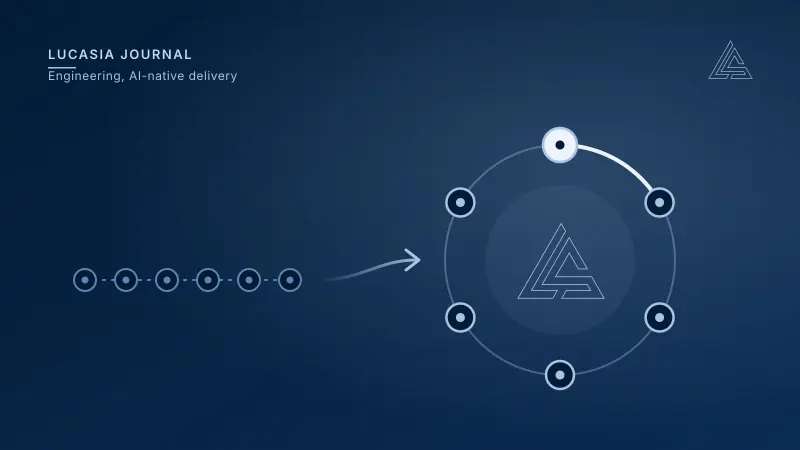
So we did what engineers do. We started automating the parts that annoyed us most. That pile of scripts and shortcuts slowly turned into one place where the business runs. That place is the Lucasia app.
-
First
Scripts for the jobs that annoyed us most.
-
Then
One place where the business runs, used by us every day.
-
Now
A product other businesses use, still shaped by our own mornings.
We were the first testers
Every feature in the app was used by us before anyone else saw it. That sounds like a slogan, but it shaped the product more than anything else.
When you are the person who has to live with a feature every morning, you notice things a requirements document never mentions. A button that takes three clicks instead of one. A summary that is technically correct but tells you nothing. An automation that does the right thing at the wrong time. Laura was especially good at this. She would use the app on real work and tell me plainly what got in the way, and I would fix it that week.
We did not want a tool that acts on its own and hopes for the best. That rule came from experience, not from a policy meeting.
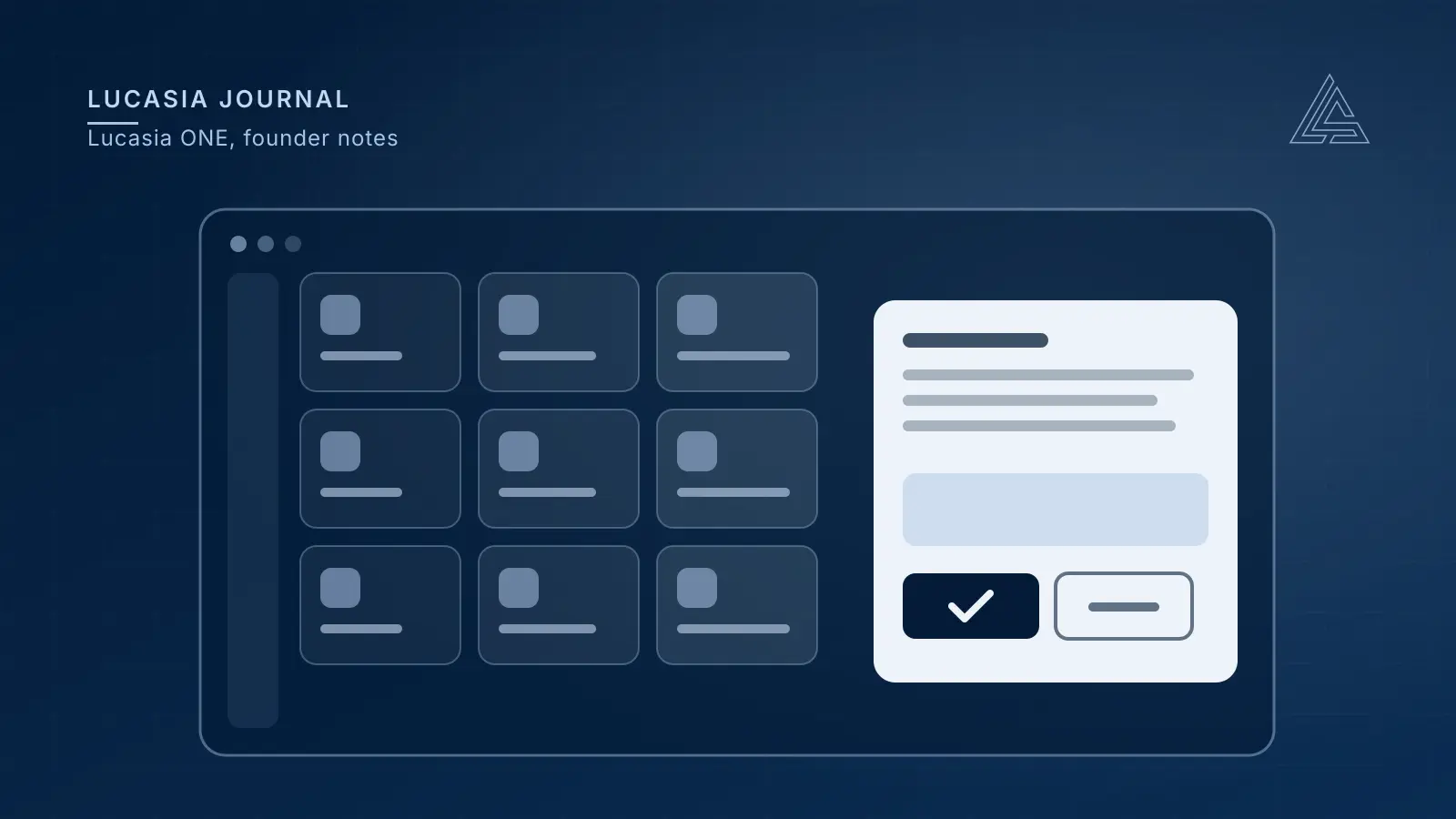
We also learned what we did not want. Anything that leaves the business, whether it is an email to a client, an invoice or a change to the website, waits for a yes from one of us.
What it took off our plates
Here is what the app actually does for us, module by module.
-
Dashboard
Every morning starts in one place: what is waiting on us, what has already been done, and the numbers that matter that day. No more opening six tabs to work out where we stand.
-
Briefings
A short briefing instead of every email and calendar entry: what happened since yesterday, what needs a decision today, and what is coming up. The feature I would miss most.
-
Approvals
Anything that matters arrives as one card: yes, amend or no. We can clear a morning's decisions in a few minutes.
-
Work
Client projects, tasks and deadlines, linked to the people and conversations they belong to. When a client asks where something is, the answer is one search away.
-
CRM
Every client and lead, with the history of what we said and promised. The app notices when a conversation has gone quiet and suggests a follow up.
-
Finance
Invoices, payments and what is overdue, connected to Xero, with Stripe next. The reminder we both used to put off is drafted for us and goes out when we approve it.
-
Documents
Proposals, contracts and notes, stored with their client or project and drafted from our own past examples. A first proposal no longer takes an evening.
-
Website builder
We edit our own pages, press publish, and the site updates. No developer ticket for changing a sentence, which, for a company of developers, was a slightly embarrassing thing to fix.
-
Automations
The connective tissue. An enquiry becomes a lead, a finished meeting gets its follow up drafted, a paid invoice updates the record. Each one is something we used to do by hand.
The app connects to the tools we already used, starting with Gmail and Xero, with Google Calendar and Stripe next, so we did not have to change how we work to get the benefit.
How it changed our lives
I want to be careful here, because “it changed our lives” is the kind of line I usually distrust in a blog post. So let me be specific.
-
Evenings
Our evenings came back. Not every evening, and not completely, but the routine admin that used to fill them is mostly gone. What is left is decisions, and decisions are quick when the work behind them is already done.
-
Follow ups
We stopped dropping things. Before the app, the honest truth is that some follow ups never happened because we forgot. Now forgetting is much harder, because the app remembers for us and asks.
-
Teamwork
We argue less about who was meant to do what. When the work, the conversations and the approvals live in one place, there is less to argue about.
-
Clarity
We think more clearly about the business. When the morning briefing tells you where you stand, you spend your energy on what to do about it, not on finding out.
What it took to build
Building the app took a long time and a lot of rewriting. The hardest parts were not the clever AI features. They were the dull, important ones: keeping each business's data in its own lane so nothing is ever shared between clients, making sure approvals cannot be skipped, and making the whole thing reliable enough that we would trust it with our own money and our own clients.
How we built it
We used AI heavily while building the app, and we were strict about how. Every change was reviewed, tested and checked before it reached the version we rely on. That discipline is the same one we bring to client work, and I wrote about it in From SDLC to ADLC.
Why we decided to share it
At some point people we worked with started asking what we were using. They had the same problem we had: too much routine work and not enough hours. That is when the app became a product.
We still use it every day, and we are still its toughest critics. If you would like to see whether it fits your business, visit the Lucasia app page or tell us how your week runs. We will show you honestly what it would take off your plate, and what it would not.
Share this article